
Bathrooms Built for Daily Use
Bathroom Remodeling in Columbus for outdated fixtures, worn surfaces, or inefficient layouts
Bathroom fixtures wear when daily moisture exposure degrades caulk seals and allows water penetration behind tile and tub surrounds, creating conditions where subfloor rot and wall damage extend far beyond visible surface problems. Vanities fail when particleboard cores swell from sink splashing and cabinet door moisture, drawer boxes separate at joints, and countertop laminate edges peel where water intrudes. Flooring develops soft spots where leak damage progresses unnoticed beneath toilets and vanity cabinets. J & G Home Renovations, Inc handles bathroom renovations in Columbus, replacing worn fixtures with shower and tub upgrades designed for wet environments, installing vanities and countertops built to handle moisture exposure, and updating flooring and tile using materials and installation methods that prevent the water damage common to Georgia humidity levels. Complete bathroom transformations reconfigure layouts that improve accessibility and storage while addressing all hidden damage previous installations concealed.
Bathroom renovations involve fixture removal and inspection for water damage, subfloor and wall repair where moisture has degraded materials, installation of cement board or equivalent water-resistant substrates, tile setting with proper waterproofing behind wet areas, vanity and countertop installation, and fixture reconnection with updated plumbing as needed. Ventilation improvements reduce moisture accumulation that causes mold growth and finish deterioration.
Arrange a property evaluation to identify water damage extent and discuss layout options for your bathroom renovation.
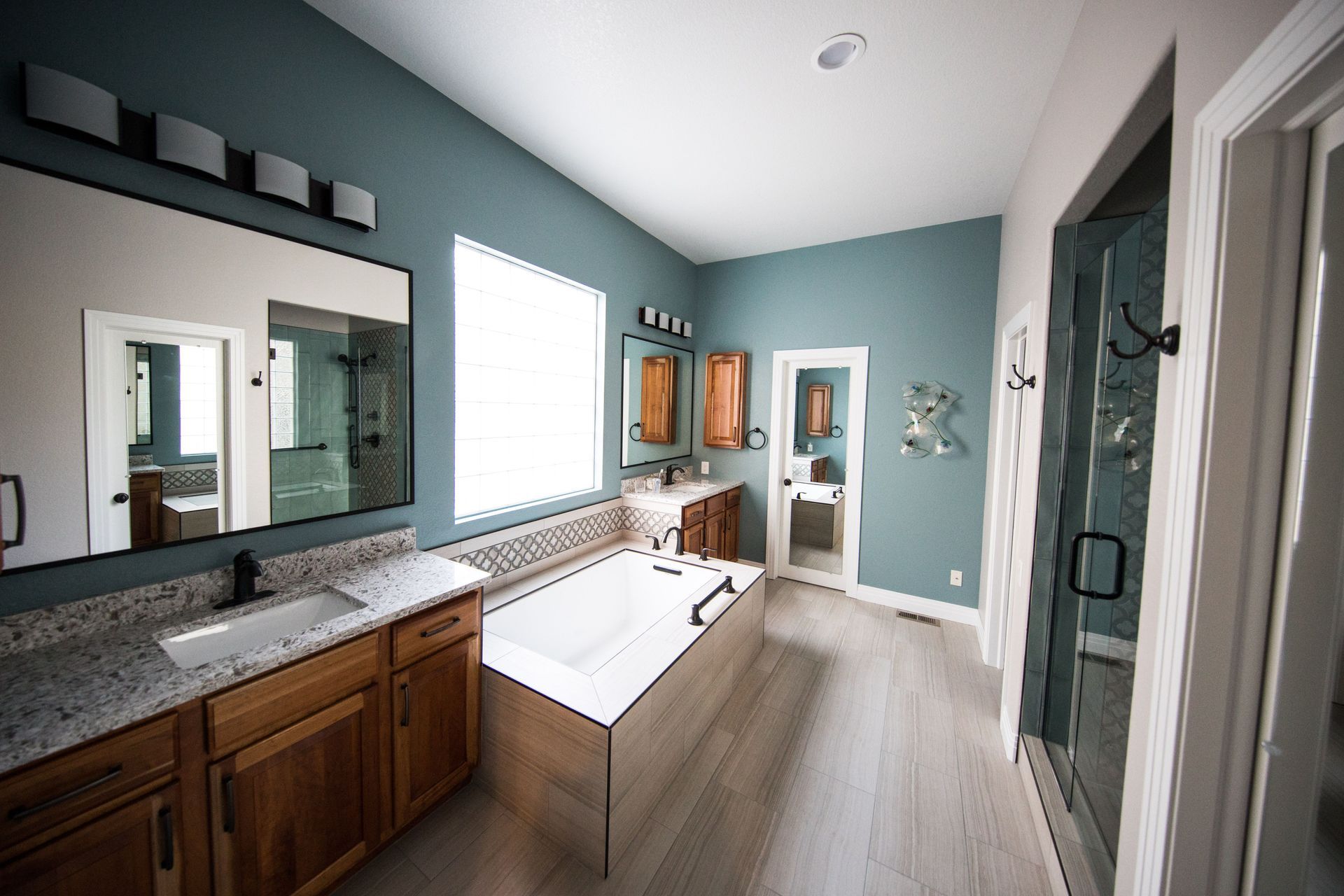
Why Proper Bathroom Construction Works for Wet Environments
Bathroom remodeling requires waterproof membrane installation behind tile in shower and tub areas, cement board or similar substrates that resist moisture damage unlike paper-faced drywall, proper shower pan construction with pre-slope and liner installation that channels water to drains, and tile setting with appropriate thinset and grout products formulated for wet locations. Flooring uses materials like ceramic tile, luxury vinyl, or sheet vinyl that withstand constant moisture exposure, installed over subfloors repaired to eliminate any rot or softness discovered during demolition. Ventilation fans sized to room volume exhaust moisture-laden air before condensation forms on surfaces.
Once renovation completes, you notice shower enclosures that drain completely without standing water, grout lines that resist mold growth, vanity cabinets that remain rigid without the swelling previous particleboard units showed, and floors that feel solid underfoot without soft areas indicating hidden damage. Caulk seals around tubs and showers remain intact and flexible, preventing water from migrating behind surrounds where it previously caused unseen structural deterioration. Improved lighting eliminates dim areas where tasks like applying makeup or shaving required additional portable lights to compensate for poor fixture placement.
Bathroom renovations include demolition, water damage repair, fixture supply and installation, tile work, vanity and countertop installation, flooring, and ventilation upgrades, but do not include window replacement, decorative elements like towel warmers or luxury fixtures beyond standard quality levels, or structural modifications that require engineering analysis. Plumbing relocations add cost when layout changes move fixtures from existing drain and supply locations.
Questions Before Starting Your Project
Property owners considering bathroom remodeling often ask about water damage extent, material choices for wet environments, and how projects affect household bathroom access during construction.
What water damage typically appears during bathroom demolition?
Demolition commonly reveals subfloor rot around toilets where wax ring leaks went unnoticed, wall stud damage behind tub and shower surrounds where failed caulk allowed water intrusion, and vanity cabinet deterioration from sink splashing that penetrated countertop seams over time.
How do shower and tub upgrades differ in complexity?
Tub replacement involves similar rough-in and surround work as existing installations, while shower conversions require subfloor reinforcement for tile weight, custom pan construction with proper drainage slope, and glass enclosure framing that standard tub surrounds do not need.
What vanity and countertop materials resist bathroom moisture best?
Solid wood or plywood-constructed vanities withstand moisture better than particleboard cores, while countertops in quartz, solid surface, or granite resist water damage more effectively than laminate options that fail when water penetrates seams around sinks.
How long do bathroom renovations take in Columbus homes?
Complete bathroom remodeling typically requires two to three weeks including demolition, repair of any water damage discovered, tile setting and curing time, fixture installation, and finish work, with timeline variations depending on tile complexity and custom elements.
Can other bathrooms remain usable during renovation?
Households continue using other bathrooms normally while one undergoes renovation, though single-bathroom homes require temporary arrangements or scheduling to minimize inconvenience during the period when fixtures are disconnected.
J & G Home Renovations, Inc completes bathroom renovation projects throughout Columbus where moisture damage, worn fixtures, or outdated layouts require replacement. Schedule a consultation to assess current bathroom condition and review upgrade options suited to your space and usage requirements.