
Outdoor Concrete Built to Last
Concrete Patios & Walkways in Columbus for properties with cracked, settling, or nonexistent outdoor hardscaping
Concrete walkways crack when installed over poorly compacted soil that settles unevenly, when inadequate thickness fails to resist flexural loads, or when control joints are spaced incorrectly for Georgia clay expansion and contraction cycles. Concrete patios develop surface deterioration when finishing techniques trap moisture, when freeze-thaw exposure occurs without air entrainment, or when drainage slopes incorrectly toward building foundations. J & G Home Renovations, Inc installs concrete patios, concrete walkways, and custom outdoor concrete throughout Crawford, using base preparation and reinforcement methods that prevent the settlement and cracking patterns common to this region's expansive clay soils.
New concrete installation begins with excavation to stable subgrade, compacted gravel base that provides drainage and load distribution, and formed edges that define thickness and slope. Custom outdoor concrete includes finish options like broom texture for slip resistance, exposed aggregate for decorative appearance, or stamped patterns that replicate stone or brick. Repairs and replacements address existing slabs where cracking or settlement creates trip hazards or drainage problems that direct water toward foundations.
Request a site evaluation to identify base conditions and design requirements for your outdoor concrete project.
What You Notice Once Concrete Work Is Finished
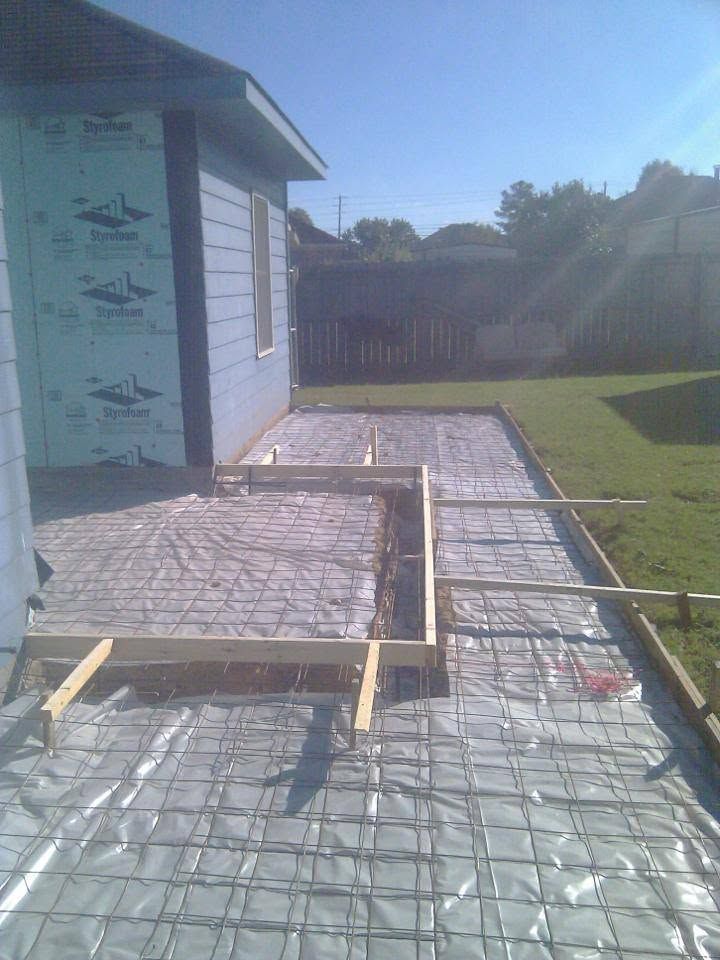
Concrete installation involves site excavation to specified depth, base material placement and mechanical compaction, reinforcement placement using wire mesh or rebar depending on load requirements, forming to establish edges and control joint locations, concrete placement and finishing, and curing procedures that develop full strength before use. Control joints are cut or formed at intervals that accommodate thermal expansion without random cracking, typically spaced at distances equal to slab thickness multiplied by two to three times in feet. Proper slope directs water away from structures at minimum one-quarter inch per foot to prevent ponding and foundation exposure.
After installation, you walk on level surfaces without the trip hazards previous broken concrete created, water drains away from building foundations instead of pooling against walls, and outdoor furniture sits stable without rocking on uneven ground. Properly installed concrete patios and walkways remain crack-free for years when control joints accommodate movement, though hairline cracking at joints is normal and does not indicate structural problems. Surface finishes resist wear from foot traffic and weather exposure without the flaking or spalling that occurs when improper finishing techniques weaken surface layers.
Concrete projects include excavation, base preparation, forming, placement, finishing, and control joint installation, but do not include removal of trees or roots that interfere with layouts, utility location or relocation, or landscaping restoration outside the immediate work area. Decorative finishes add cost compared to standard broom texture but do not affect structural performance or longevity.
Answers to Frequent Service Questions
Homeowners planning concrete patios and walkways often ask about base requirements, timing, and how installations perform over Georgia clay soils that cause settlement issues.
What base preparation prevents concrete from settling or cracking?
Proper base preparation involves excavating to stable subgrade below topsoil and organic material, installing four to six inches of compacted gravel that drains water and distributes loads evenly, and ensuring uniform support across the entire slab area before concrete placement.
When should concrete walkways and patios be installed in Columbus?
Installation occurs year-round when ground conditions allow excavation and grading, though scheduling during drier months simplifies base preparation and reduces delays from weather interruptions that extend project timelines.
How thick should concrete patios and walkways be?
Walkways typically require four inches of thickness for foot traffic, while patios need four to six inches depending on furniture loads and whether vehicle access occasionally crosses the surface during lawn maintenance or other activities.
Why do control joints matter in concrete slabs?
Control joints create intentional weak points where concrete cracks in straight lines as thermal expansion and contraction occur, preventing random cracking across slab surfaces and maintaining appearance while accommodating normal concrete movement.
How long before I can use newly installed concrete?
Concrete develops sufficient strength for foot traffic within twenty-four to forty-eight hours after placement, but requires seven days of curing before heavy furniture placement and twenty-eight days to reach full design strength for maximum load capacity.
J & G Home Renovations, Inc handles concrete patio installation, walkway construction, and outdoor concrete repairs for Columbus properties where existing hardscaping has failed or where new installations improve outdoor functionality. Arrange an on-site consultation to discuss layout options and base requirements specific to your soil conditions.